
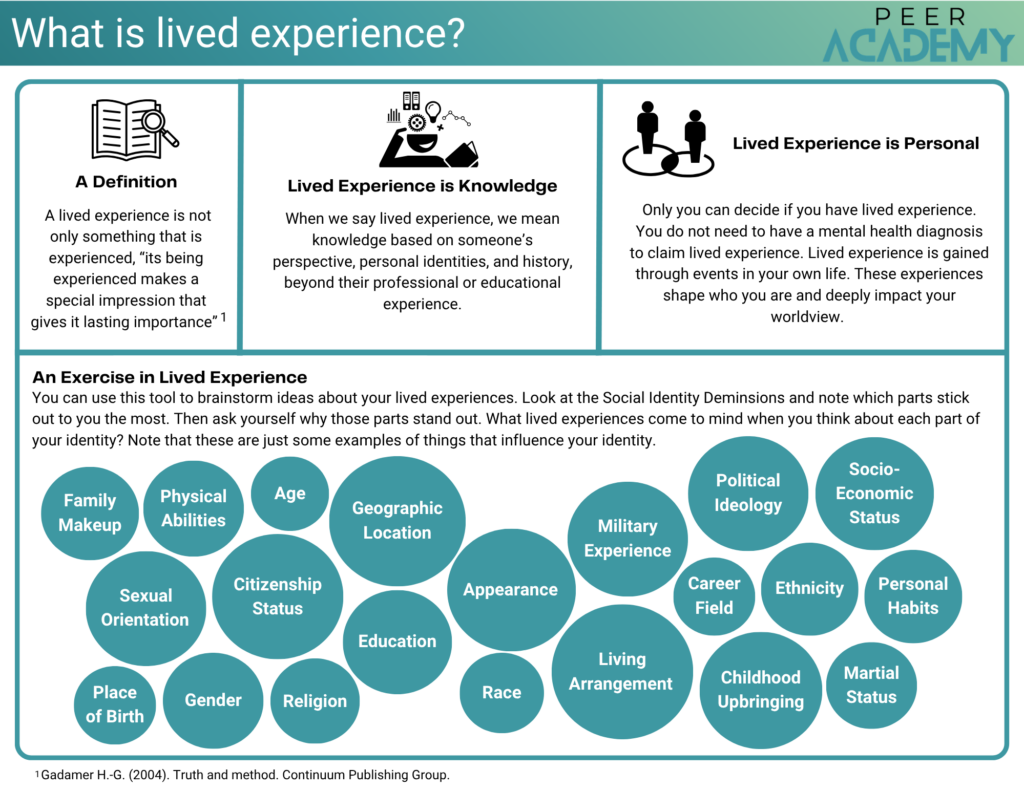
Lived experience is a broad concept, as discussed in our article about the basics of peer support. But, for the purposes of eligibility as a Certified MHPS, a person must have lived experience with a mental health condition. Specifically, a person meets eligibility if “they have experienced a significant life disruption due to their own mental health condition and/or substance use disorder and are now in recovery.”
Let’s explore what lived experience looks like as it relates to both mental health and substance use. We mentioned that people must be in recovery after experiencing “a significant life disruption due to the person’s own mental health condition.” – but what does a “significant life disruption” mean?
The Texas Administrative Code defines a mental health condition as: a condition (excluding a single diagnosis of an intellectual or developmental disability or a substance use disorder) that substantially impairs:
(A) an individual’s thought, perception of reality, emotional process, or judgment;
(B) an individual’s behavior; or
(C) an individual’s ability to participate in daily routines.
One thing we want to highlight in this definition is that this definition does not include a diagnosis as a requirement. This is because peer support is non-clinical, and therefore, Peer Specialists do not rely on diagnoses to relate to other people.
More about Recovery
Peer Specialists are open and authentic about their experiences with recovery, and sometimes they share them when it is helpful to the person they are providing services to. That is why certified Peer Specialists in Texas must be able to “demonstrate current self-directed recovery” and “be willing to appropriately share their own recovery story with recipients.”
If you do not feel ready to share your experience with mental health and/or substance use challenges and your experience with your recovery journey, you are probably not quite ready to be a Peer yet.
Recovery from a “mental health condition” may or may not include the use of medication, therapy, or other clinical support. Regardless of the pathway that they have chosen, Mental Health Peer Specialists need to be able to demonstrate that they are strongly grounded in their own recovery.


